OUTCOMES
A research-led redesign that brought Snug Harbor’s new brand onto the web and rebuilt the site around the questions visitors were asking. Bellweather led research, strategy, and design; development partner Dreamers of Day built the site.
CHALLENGE
Snug Harbor draws more than 518,000 visitors a year to an 83-acre campus on Staten Island. Visitors encounter museums, public gardens, a working farm, wetlands, artist studios, a music hall, a Chinese Scholar’s Garden, and 30 artists in long-term residency. On top of this, 3,000+ events happen here annually. Many visitors come for one slice of it and might not know the rest exists.
The website was 12 years old, had roughly 60 pages, and did not reflect the breadth and depth of a visit. A new brand in 2024 became another reason for a relaunch. Underneath this, there was an efficiency problem: events accounted for 99% of everything the organization published, but publishing them was a painstaking, manual process routed among program organizers, partners, the CRM, and the website. It was time for a better-organized and better-designed website.
APPROACH
The calendar is the front door.
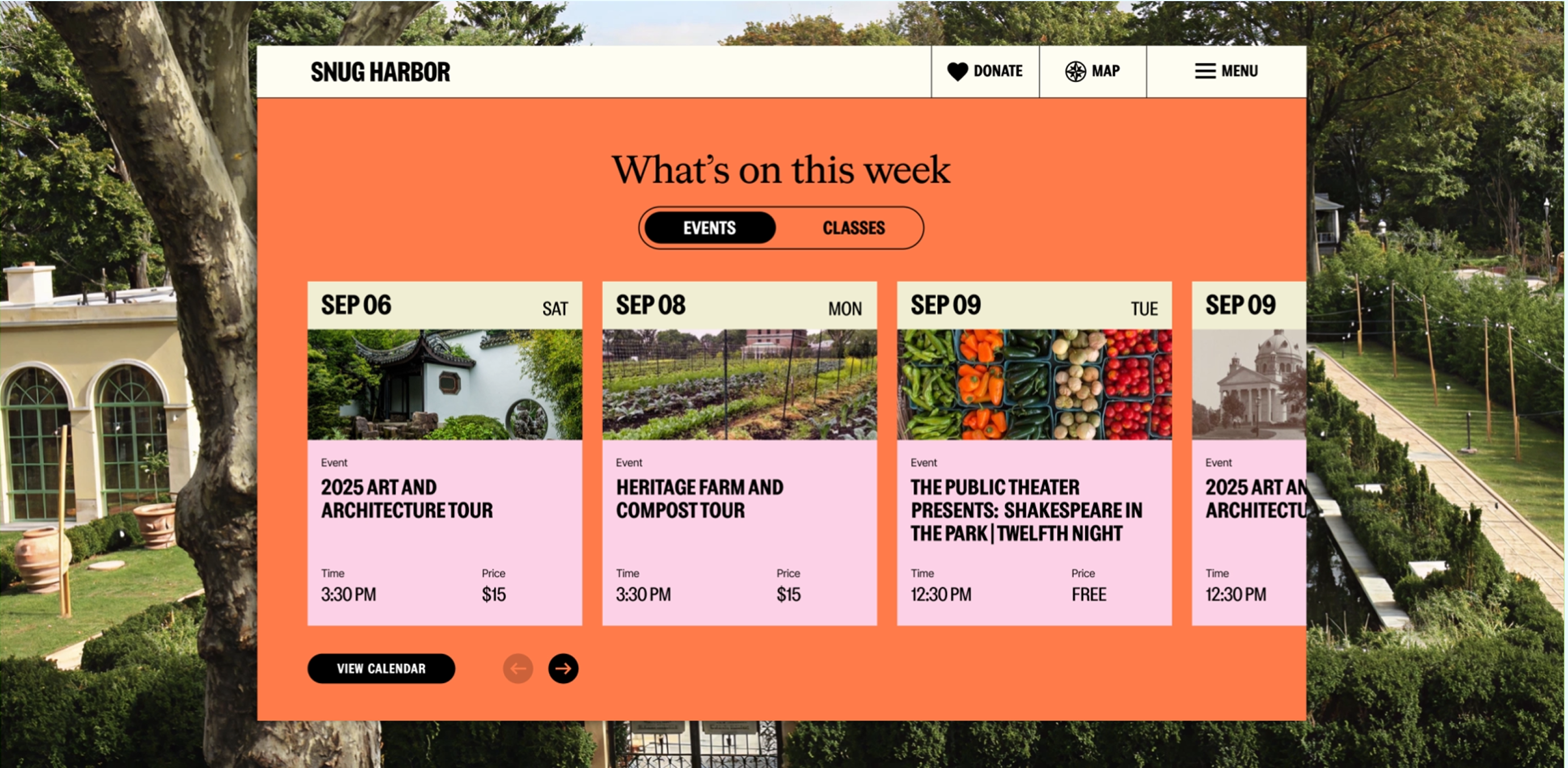
Our survey and interviews across Snug Harbor’s staff all pointed in the same direction: visitors were confused about what was open, where to go, and what Snug Harbor offers. The new homepage answers all of this within a few scrolls.
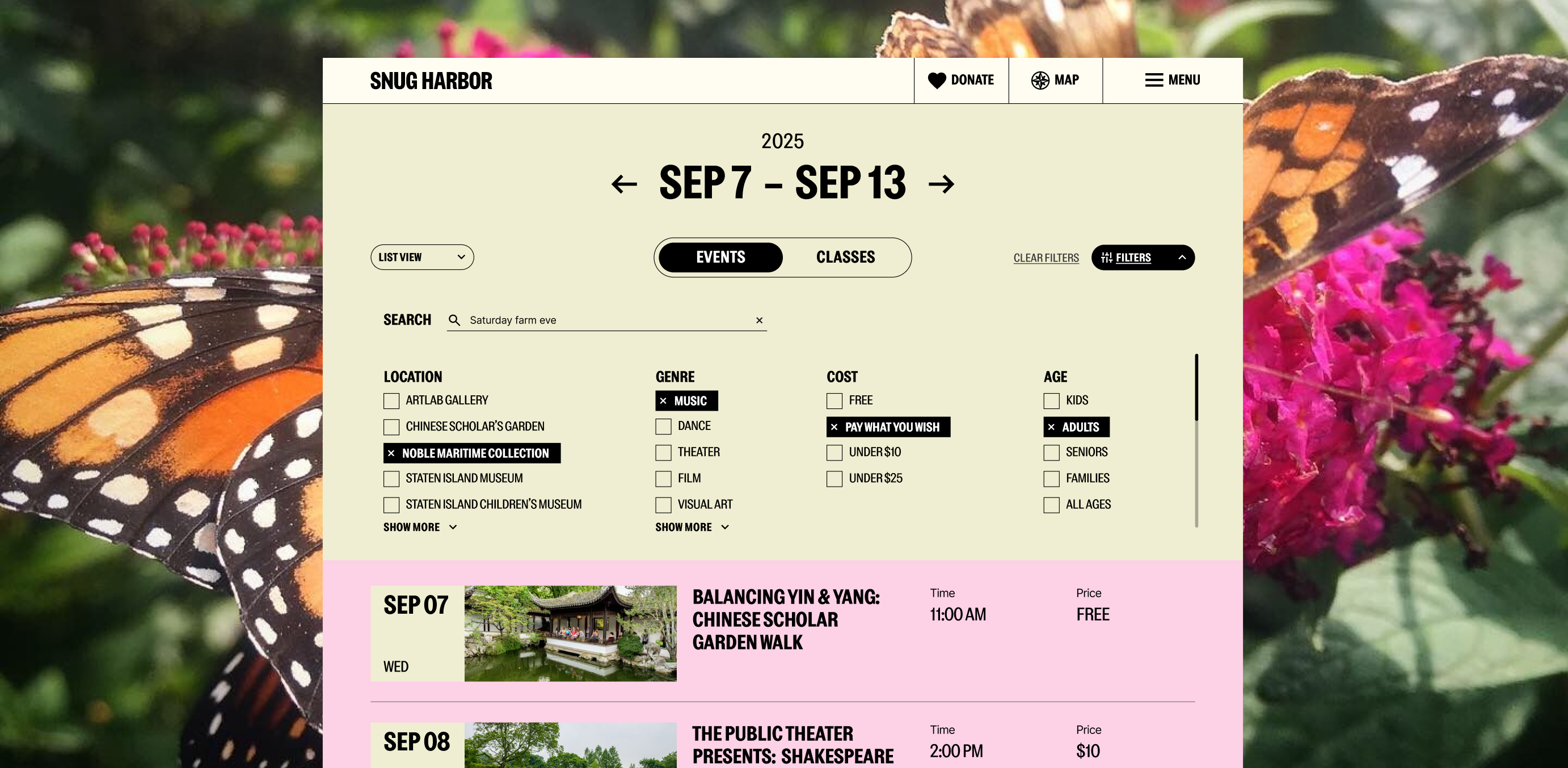
We added real-time entry points (What’s Happening Today, This Weekend, This Week), an updated content architecture with 11 content types alongside a taxonomy that gives every department and partner the same vocabulary, and an event workflow designed to unblock the publishing bottleneck.
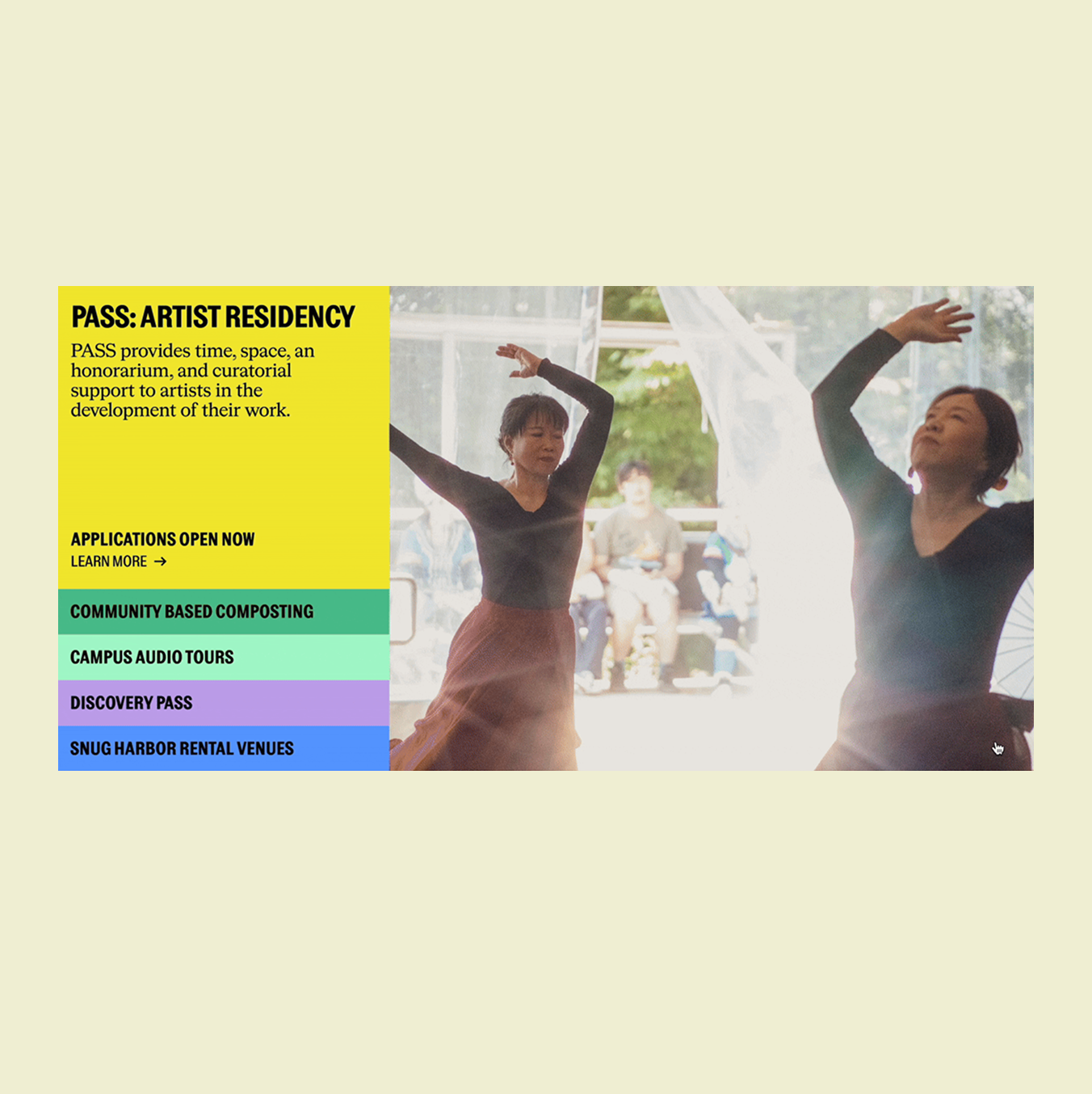
What We Delivered
Research, strategy, and design for the most visible expression of the organization.
Resarch
Research across visitors, staff, search, and the existing platform
A discovery questionnaire and 30-minute one-on-one interviews across leadership, marketing, and program staff, plus an on-site campus visit, competitor analysis against peer institutions (Central Park, Governors Island, Brooklyn Bridge Park, Wave Hill, New York Botanical Garden), and four audits: SEO, analytics, UX/UI, and technical. Search research found 2,900 monthly searches for “things to do in staten island” that the site was not competing for.
Strategy
An information architecture and content strategy built around the calendar
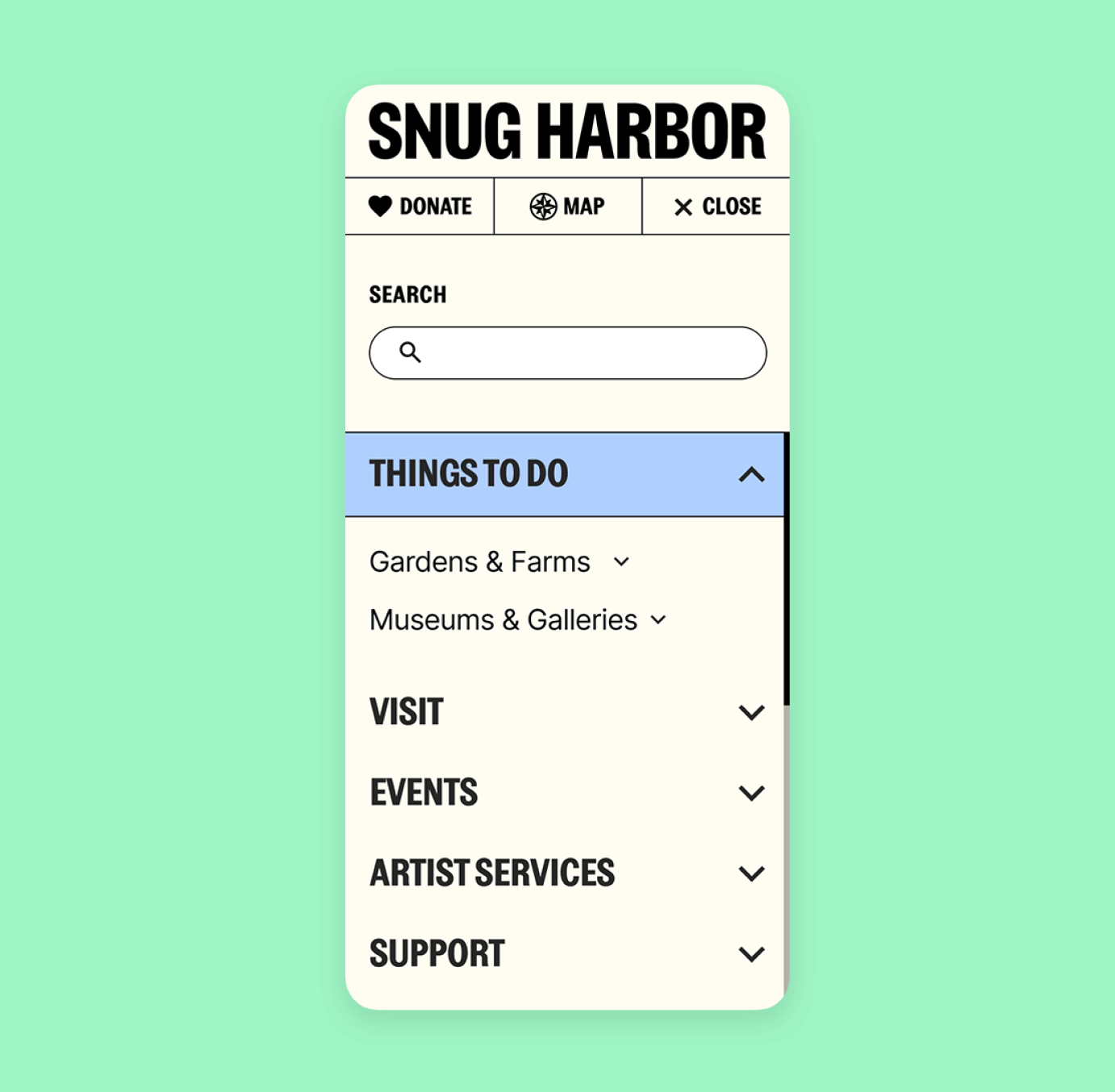
A main navigation with real-time event entry points at the top, a content model of eleven content types and twenty-five taxonomy categories to support filtering, search, and reuse across departments and campus partners, a plain-language content standard, an SEO content plan, and a goals-and-metrics framework tied to pageviews, engagement time, and conversions for donations, memberships, and events.
Creative
High-fidelity mobile and desktop design
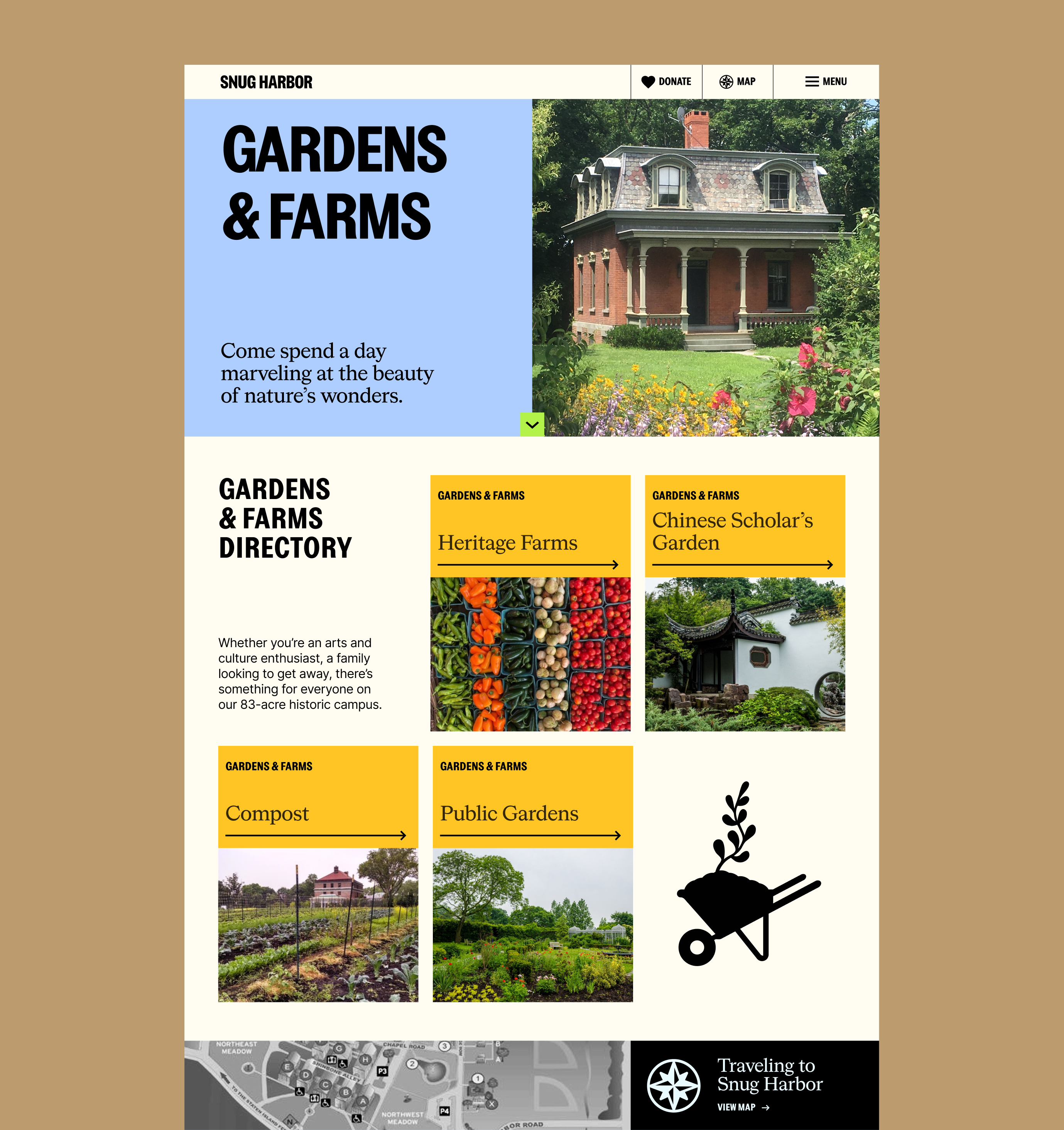
Typographic, color, and visual ideation with AA-level accessibility emphasis, photography and illustration direction that works with the brand’s five custom illustrations against a limited photography budget, and high-fidelity desktop and mobile mockups for repeatable modules and page templates including the events calendar, map and directions, exhibitions, hours and admissions, news, and careers.
Technical Architecture
Audience-focused information architecture, ready for CMS integration
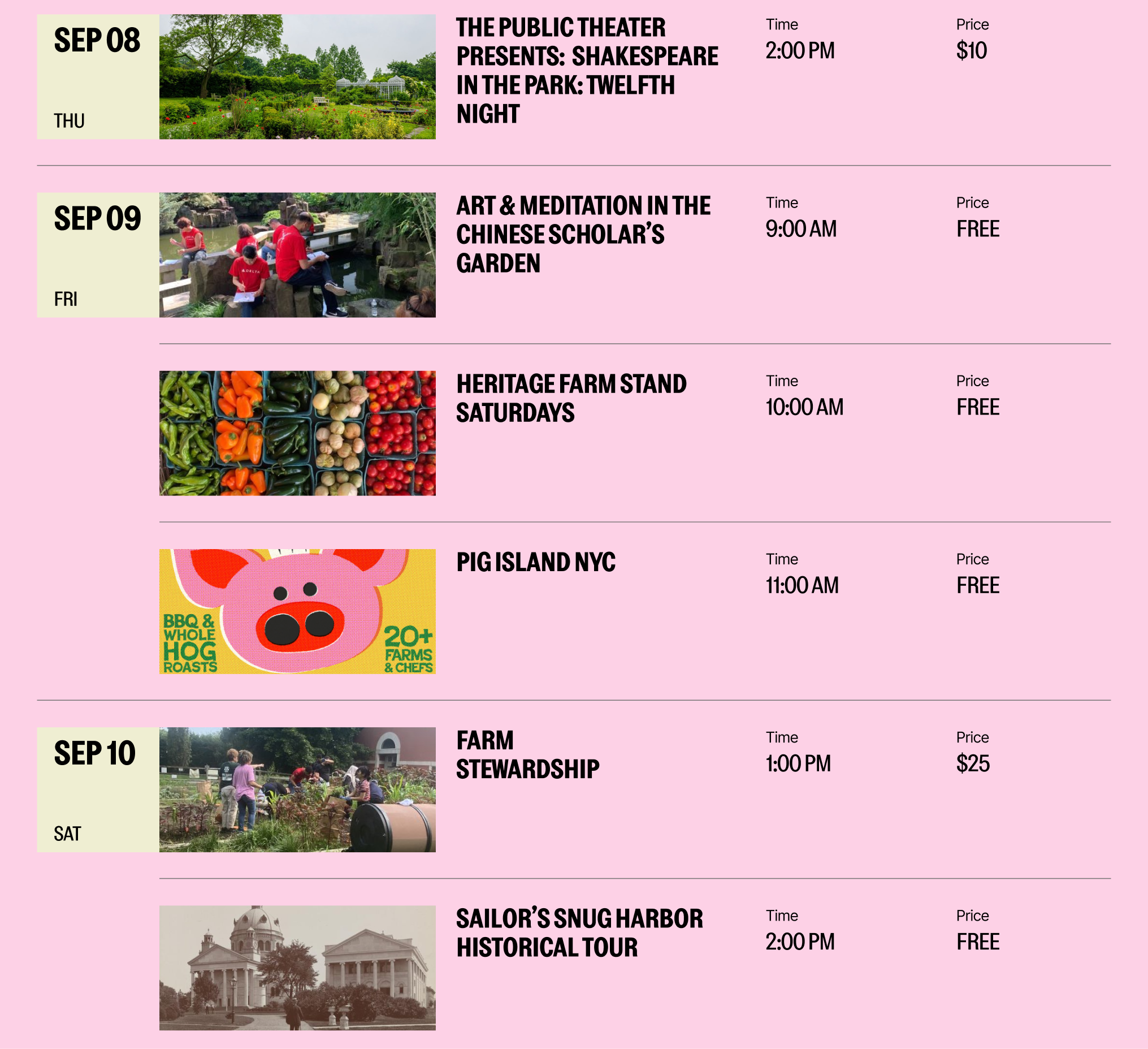
Our technical architecture included roughly 20 modular components, taxonomy-driven filtering, and a scalable event architecture that supports recurring and one-time events across list and calendar views.
ABOUT THE ENGAGEMENT
A standard cultural calendar gives you what you need, if you already know when you’re coming. Snug Harbor’s visitors came when they had a free afternoon, a Saturday with the kids, or were drawn by an event or artist. We built the calendar around those journeys, not around drop-down menus. What’s Happening Today, This Weekend, This Week became reasons to visit and reasons to return.
Our research showed the calendar could shape the engagement. We rebuilt the information architecture so the site could deliver those time-based stories programmatically, improving the event publishing flow. Research and listening help us build what matters for the audience, every time.